
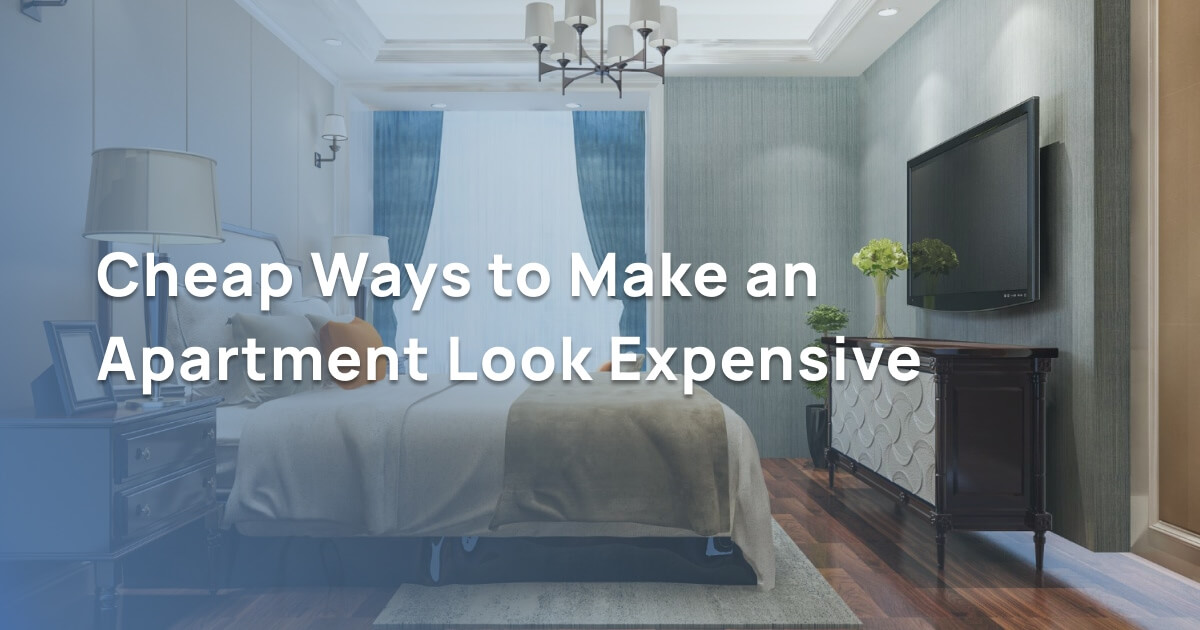
Your landlord painted every wall the same shade of builder beige. The light fixtures came straight from a 1990s contractor catalog. The bathroom hardware looks like it was chosen by someone who has never set foot inside a bathroom. And yet, you want your apartment to feel like somewhere you actually want to live, not just somewhere you sleep between shifts.
Here’s the thing: the cheap ways to make an apartment look expensive don’t require a renovation budget, a brilliant eye for design, or even a Pinterest account. They require understanding a handful of design principles that professionals use, and then applying them with products that cost less than a round of drinks. Interior designers have long known that the perception of luxury has very little to do with what something costs and almost everything to do with how it’s presented.
This guide breaks down exactly how renters can use that to their advantage, room by room.
How Does Lighting Change the Way a Room Feels?
Lighting is the single highest-leverage change you can make in any apartment, and most renters completely ignore it. The overhead fixtures your landlord installed cast what designers call “flat light”. It illuminates everything equally, which means it makes everything look equally cheap. Luxury spaces layer their lighting. They have ambient light (general fill), task light (functional, directional), and accent light (atmosphere).
You can replicate this without touching a single wire. Plug-in sconces, table lamps on opposite corners, and LED strip lights tucked behind a TV or underneath a floating shelf all add depth. The color temperature matters enormously. Swap any bare bulbs to 2700K–3000K “warm white” LEDs, which mimic incandescent glow. Research from the Lighting Research Center at Rensselaer Polytechnic Institute consistently shows that warm, layered lighting increases perceived comfort and even the perceived value of a space. A set of three warm-toned lamps from a thrift store, fitted with matching bulbs, will do more for a living room than almost any piece of furniture you could buy.
Dimmer switches are renter-friendly as long as you keep the original switch to reinstall at move-out. A smart plug paired with a voice assistant lets you set lamp schedules, so you never walk into a harshly lit apartment again.
What Do Curtains Actually Do for an Apartment?
Curtains do three things: control light, add softness, and change the apparent height and width of a room. The mistake almost everyone makes is hanging curtain rods at the window frame. Interior designers hang them as close to the ceiling as possible and extend the rod six to twelve inches beyond each side of the window. The result is a window that appears dramatically larger, walls that read as taller, and a room that feels more like a well-considered home than a rented box.
Linen-look curtains in off-white or cream cost under $30 a panel at retailers like Target or IKEA (the IKEA DYTÅG and MAJGULL panels are favorites in budget design circles for a reason). The fabric has enough texture to look substantial and enough softness to filter light beautifully. For renters worried about the curtain rod, tension rods exist for lightweight panels, or Command adhesive hooks can support a lightweight wood dowel in smaller windows.
The aggregate effect (curtains hung high, panels puddling slightly on the floor) is a visual trick that reads as “designer” even when the curtains themselves cost almost nothing.
Can Peel-and-Stick Products Actually Look Good?
They used to be an aesthetic compromise. They aren’t anymore. The peel-and-stick category has genuinely matured: removable wallpaper, peel-and-stick backsplash tiles, and adhesive floor tiles have all improved dramatically in texture and print quality over the past few years.
A single accent wall in a bedroom or entryway, like using removable wallpaper in a bold print or a textured linen weave, can create the kind of visual statement that makes a room feel curated. Brands like Chasing Paper, Tempaper, and Rifle Paper Co. produce legitimately beautiful patterns. A typical accent wall costs $60–$150 in materials and about an afternoon of time.
Peel-and-stick backsplash in a kitchen transforms a dated rental without a single visit from a contractor. The key is choosing tiles with a matte or stone finish rather than glossy plastic, as gloss reads as cheap; matte reads as intentional. In a bathroom, the same logic applies: adhesive tiles around a mirror or vanity area add architectural detail that a builder-grade bathroom desperately needs.
The industry term for all of this is “renter-friendly decor,” and it has become a legitimate design category, not just a workaround.
How Do Mirrors Make a Small Apartment Feel Bigger?
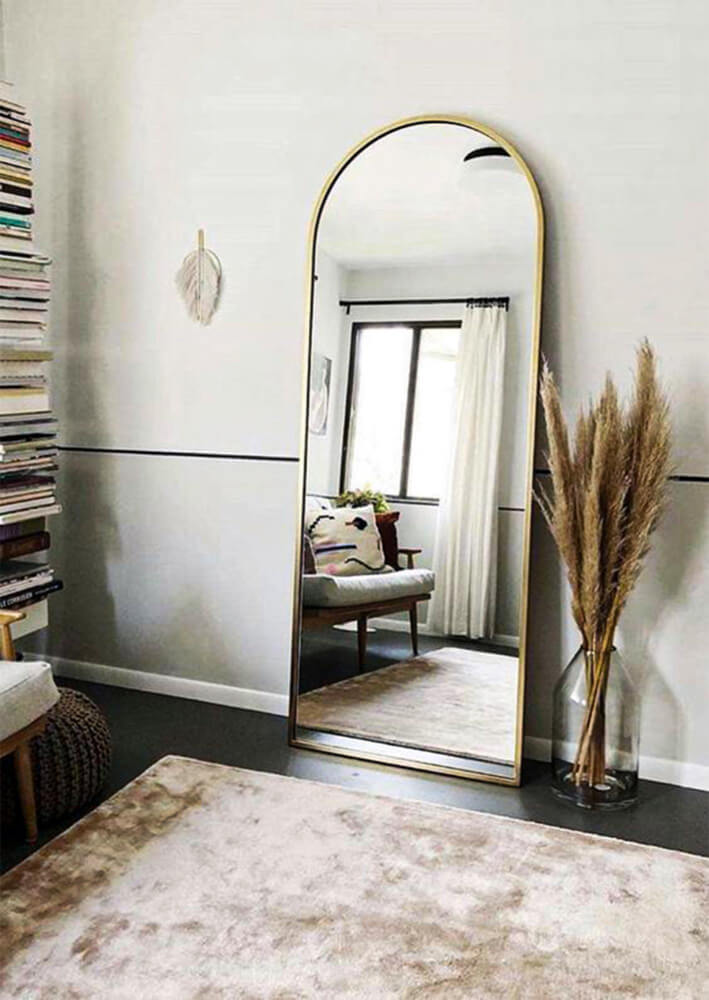
Designers use mirrors to do two things: expand the perceived size of a room and bounce light into dark corners. Both are especially useful in apartments, where square footage is often limited and natural light is often obstructed.
A large floor mirror leaned against a wall reflects the room back at itself and effectively doubles the visual depth, rather than a hung mirror. It also avoids the need for heavy-duty anchors. A gallery arrangement of smaller mirrors creates the same effect while also functioning as wall art. Mirrored surfaces on furniture (a secondhand mirrored side table, a vintage mirrored tray on a console) add glimmer without the visual weight of large furniture pieces.
The placement matters: mirror a window to multiply natural light, or position a mirror to reflect a lamp or a piece of art you love. What you don’t want is a mirror reflecting a pile of laundry or a cluttered kitchen counter. Mirrors amplify whatever they face.
What’s the Fastest Cheap Apartment Makeover Idea That Actually Works?
Hardware swaps. Without question. The cabinet pulls and drawer handles in a rental kitchen or bathroom are almost always generic, and changing them takes about fifteen minutes with a screwdriver. A set of unlacquered brass, matte black, or brushed nickel knobs from Amazon or a hardware store costs $15–$40 for a typical kitchen. The transformation is jarring in the best possible way. The same cabinets that looked like a rental now look like they belong in a design magazine.
The same principle applies to light switch plates. Standard white plastic cover plates are an afterthought that every eye registers subconsciously. Replacing them with screwless covers in brushed nickel, or with unlacquered brass plates, is a $3–$8 change per switch that signals attention to detail throughout the home. Keep the originals in a labeled bag so you can reinstall them when you move out.
These micro-upgrades compound. Each one individually is subtle; together, they create a sense that someone with taste lives here.
How Does Furniture Arrangement Affect How Expensive a Room Looks?
Most apartment dwellers push furniture against the walls. It feels logical as it maximises open floor space. But it’s actually a design mistake. Rooms where furniture floats slightly away from the wall look more intentional, more editorial, and more like a professionally designed space. Interior designers consistently describe furniture pulled from the wall as a hallmark of a room that “breathes.”
In a living room, centering the sofa around a rug (rather than having it touch the wall) anchors the seating area visually. The rug itself deserves attention: a too-small rug is one of the most common budget decor mistakes. The front legs of every sofa and chair should sit on the rug. If your rug doesn’t accommodate that, it’s the wrong size. A large area rug, even an inexpensive jute or flatweave option from Ruggable or Amazon, defines a space in a way that makes the whole room feel considered.
Odd numbers are another design principle worth internalizing. Groupings of three objects always look more organic and deliberate than groupings of two or four. Three vases in varying heights, three art prints on a wall, a cluster of three throw pillows. Odd numbers have a dynamic quality that even numbers lack.
How Do Texture and Layering Create a Luxury Apartment Look on a Budget?
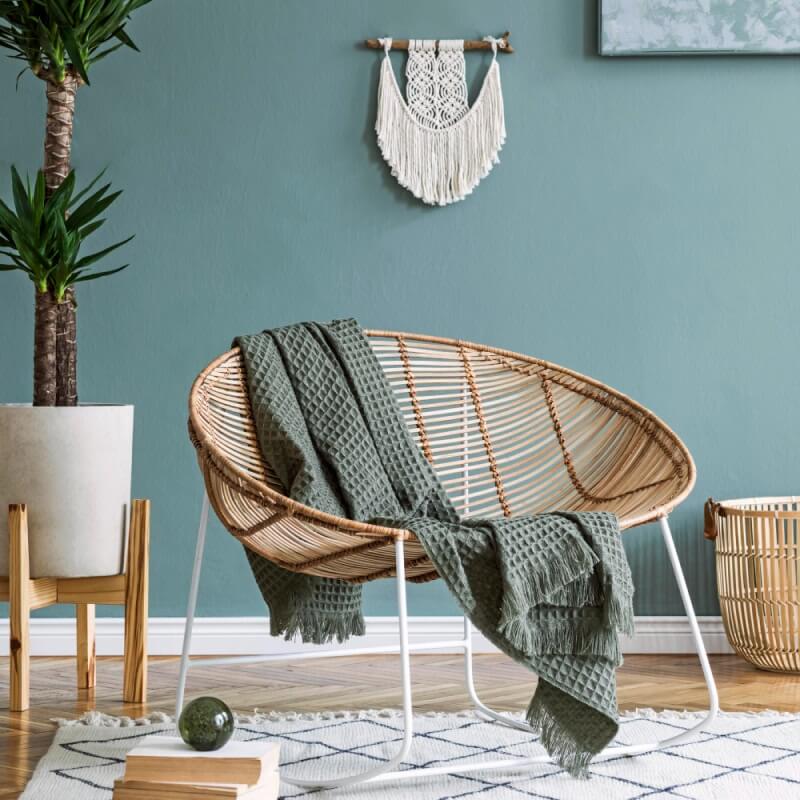
Expensive rooms are textured rooms. They layer materials like linen, velvet, wood, ceramic, and jute. So that the eye moves through the space and registers depth and warmth. Cheap rooms are flat. They have one type of fabric, one type of surface, and nothing that invites touch or closer inspection.
You can add texture almost entirely through soft goods: a chunky knit throw, a velvet pillow cover, a woven basket used as a planter, a linen duvet cover. None of these items need to be expensive. A $12 velvet pillow cover from Amazon alongside a $25 linen throw creates a layered effect that reads as curated even if each piece cost almost nothing.
Plants add biological texture that no manufactured object can replicate. A mature pothos, a rubber plant near a window, or a cluster of small terracotta pots on a windowsill adds life literally to a space. Design researchers at the University of Exeter found that adding plants to a workspace increased wellbeing scores significantly, and interior designers have long observed the same effect in residential settings: rooms with plants simply feel more alive and more welcoming.
Does Decluttering Actually Make an Apartment Look More Expensive?
Yes, and this is the most underrated tip on this list. Luxury spaces are not cluttered. They have clear surfaces, intentional objects, and negative space. Negative space, which is the visual breathing room between objects, makes something feel expensive. Because, it signals that the inhabitant has enough of everything they need and doesn’t need to display it all at once.
This doesn’t mean minimalism. It means editing. For every item on a shelf or a counter, ask whether it earns its place. A kitchen counter with a handsome olive oil bottle, a wooden cutting board, and a small potted herb reads as considered. The same counter with a toaster, a blender, a stack of mail, a fruit bowl, and three mismatched appliance cords reads as cluttered regardless of how nice any individual item is.
Closed storage is your best friend in a rental apartment. Baskets on shelves, a storage ottoman in the living room, under-bed storage bins, anything that moves visual chaos out of sight contributes to the calm, edited quality that expensive interiors share.
How Can Scent and Small Sensory Details Elevate a Space?
This one is less about visual design and more about the full sensory experience of being in a home. Research on environmental psychology consistently shows that scent is the most powerful driver of perceived comfort and luxury in a space. Hotels spend significant resources on signature scents precisely because smell triggers memory and emotional associations faster than any visual cue.
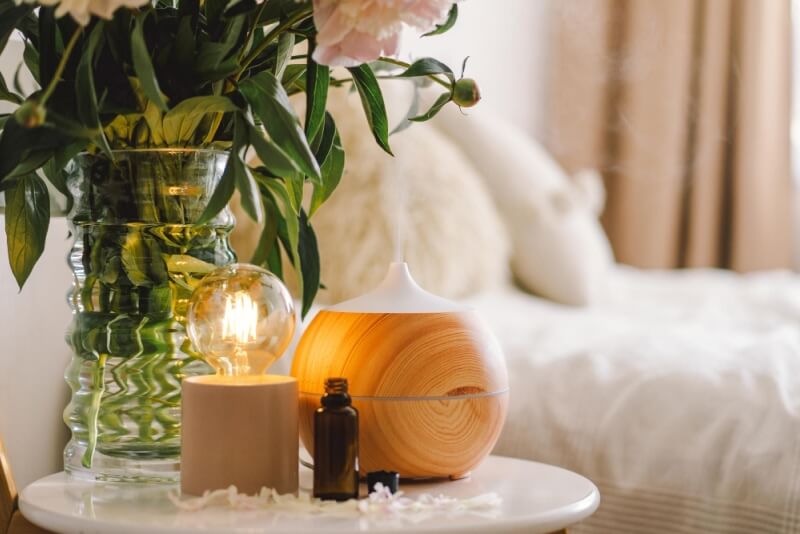
You don’t need a diffuser that costs $200. A soy candle in a scent you love, placed near the entryway, creates an arrival experience that shifts how both you and your guests experience the apartment from the moment the door opens. Reed diffusers maintain ambient scent passively. A small simmer pot with citrus peel and cinnamon on a weekend morning does something similar.
The sensory details that feel effortful, like fresh flowers on a table even once a month, a coordinated set of hand towels in the bathroom, or real soap in a ceramic dish rather than a plastic dispenser, accumulate into an experience that feels deliberate and generous, which is exactly what luxury feels like.
Key Takeaways
The cheap ways to make an apartment look expensive share a common logic: they borrow design principles that professionals have used for decades and apply them with affordable materials. Lighting creates depth. Curtains hung high expand space. Hardware swaps change how an entire room reads. Mirrors multiply light and square footage. Texture layering signals richness. Decluttering creates the negative space that luxury requires.
None of these changes are permanent. None require your landlord’s permission. Most cost less than $50. Together, they can genuinely transform a generic rental into a space that feels like a home, and a considered, beautiful one at that.
Frequently Asked Questions
How can I make my cheap apartment look expensive without spending a lot of money?
Start with lighting and curtains. They have the highest visual impact per dollar spent. Swap overhead lighting for layered lamp light, hang curtains close to the ceiling with rods that extend beyond the window frame, and replace generic cabinet hardware. These three changes alone transform the feel of most apartments.
What is the best renter-friendly decor that won’t damage walls?
Removable wallpaper (brands like Tempaper and Chasing Paper), Command adhesive hooks, tension rods for curtains, and peel-and-stick backsplash tiles are all renter-safe. For heavier items, spackle and a touch of matching paint at move-out is generally straightforward and expected by landlords.
What cheap apartment makeover ideas give the biggest visual impact?
Hardware swaps (cabinet pulls and switch plates), a large area rug, and floor-length curtains hung near the ceiling give the most dramatic return on investment. Each is reversible, affordable, and immediately noticeable.
How do I make a small apartment look bigger on a budget?
Use large mirrors to reflect light and depth, keep curtains floor-length and hung high to elongate walls, choose furniture with exposed legs to show floor underneath (which creates a sense of openness), and ruthlessly declutter surfaces. Avoid too-small rugs. An undersized rug makes a room feel smaller, not larger.
Does budget apartment decor actually work, or does it always look cheap?
The difference between budget decor that looks cheap and budget decor that looks expensive is almost always execution: scale, cohesion, and editing. A $15 throw pillow in the right texture and color, in the right position on a well-arranged sofa, looks expensive. The same pillow tossed randomly on a cluttered couch doesn’t. This principle is what separates the two, not the price.
